The Skills That Win Games Build A Life
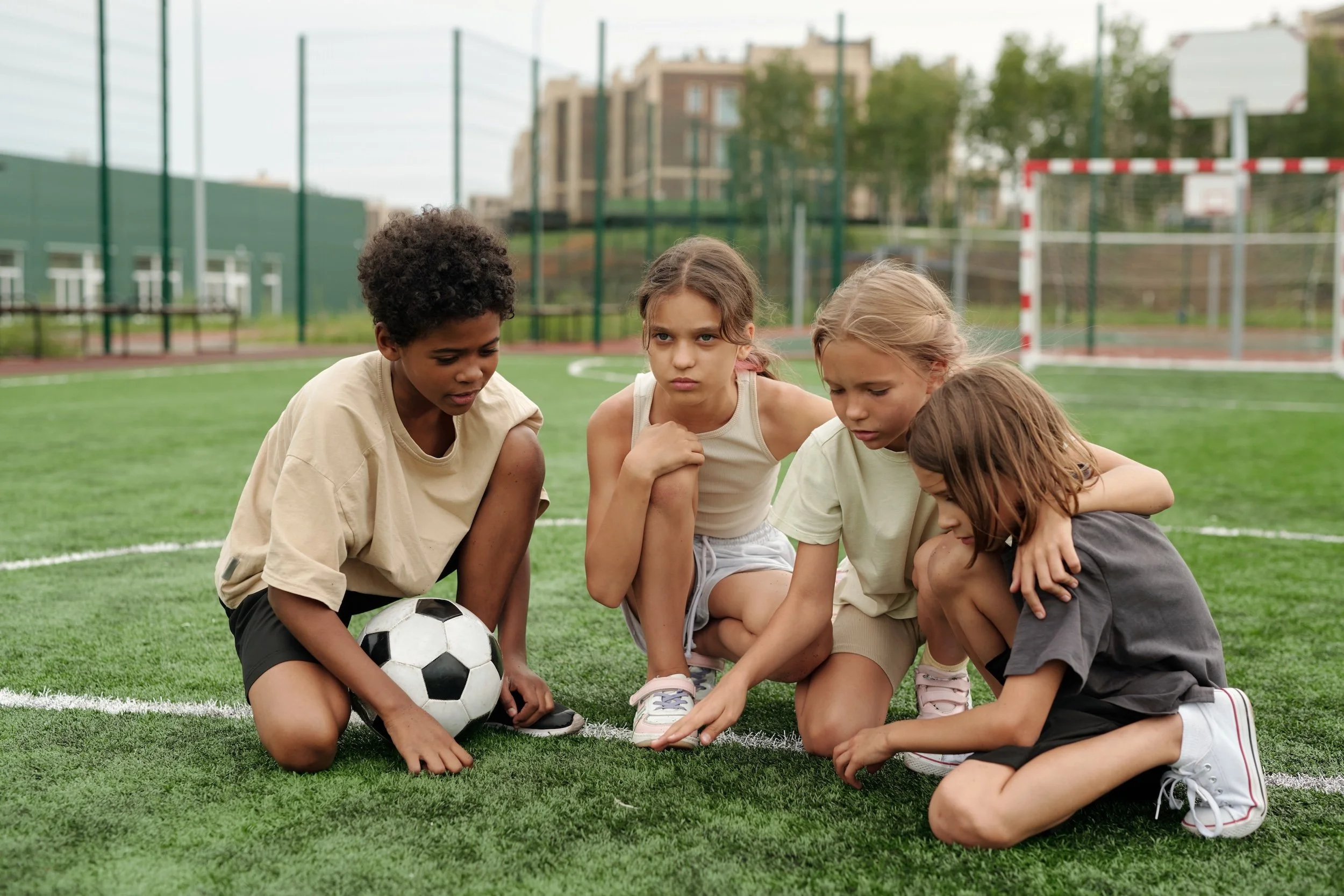
Young soccer players sitting together on a field as one girl comforts a teammate.
As parents, we all want to support our kids to grow into capable people. Kids who can navigate the world with confidence. This means teachings skills like empathy, self-awareness, communication, goal-setting, stress management, resilience, adaptability, emotional regulation, and problem-solving. These aren’t just things that get a kid through school or a season of sports. They’re skills that shape everything a kid does, long after the final whistle.
Life Skills are the Foundation
Here’s something I’ve learned both as a parent and a clinician: life skills and performance skills aren’t eactly two separate categories. They’re the same set, applied in different arenas. Life skills are the foundation performance sits on, whether that performance shows up on the field, in a classroom, or later in a career. A kid who can manage stress, and regulates their emotions is the same kid who stays calm and focused in a big game or a big test. A kid with strong communication skills isn’t just easier to coach, they do better in the locker room, group projects and eventually in a job interview.
Resilience is the Clearest Example
Resilience is probably the clearest place this shows up. Whether a kid is dealing with a tough loss on the field or a hard week at school, they need to know how to bounce back. Resilience isn’t the same as “tough it out.” It is knowing how to process a setback, learn something from it, and keep moving. Teaching kids to handle both winning and losing well is what builds real confidence, not the fragile kind that only shows up when things are going their way.
Performance Skills are Built on Life skills, Not the Other Way
Performance skills like focus, composure, and leadership are built on the life skills underneath them. A kid who’s developed empathy is usually a better teammate, because they can actually read the room and understand what a teammate needs. A kid who’s developed emotional regulation can handle the pressure of competition without getting hijacked by frustration or anxiety. Take away the life skill, and performance skill doesn’t hold up once things get hard.
Both Matter at the Same Time
As parents, the job isn’t to pick a lane between talent and character. Both matter and they build each other. It’s not just about helping them handle themselves: their emotions, their setbacks, the people around them.
The goal isn’t just a talented kid. It’s a resilient, well-rounded one who can handle whatever shows up, on the field or off it. Build both life skills and performance skills together, and you’re not just setting a kid up for a good season. You’re setting them up for a good life.
Next: Slump or Something More? How to Tell if your Athlete Needs More than Coaching
About OAZ
At Optimal Athletic Zone, we believe that connecting mental wellness with peak performance strategies helps raise, happy, healthy, resilient kids, while also helping them perform their best on the field.
I’m Sue Sugarman, LCSW, BCD, a therapist, athlete a sports mom. I hold the International Olympic Committee’s Certificate in Mental Health of Elite Athletes and teach at NYU Silver School of Social Work. I founded OAZ to support youth athletes on and off the field. Together with Becca Klapper, EdM, MA, CMPC, we help kids build kids confidence, handle pressure and enjoy their sport, while become heathy, happy, resilient people along the way.
