A Bad Game in Middle School vs. High School
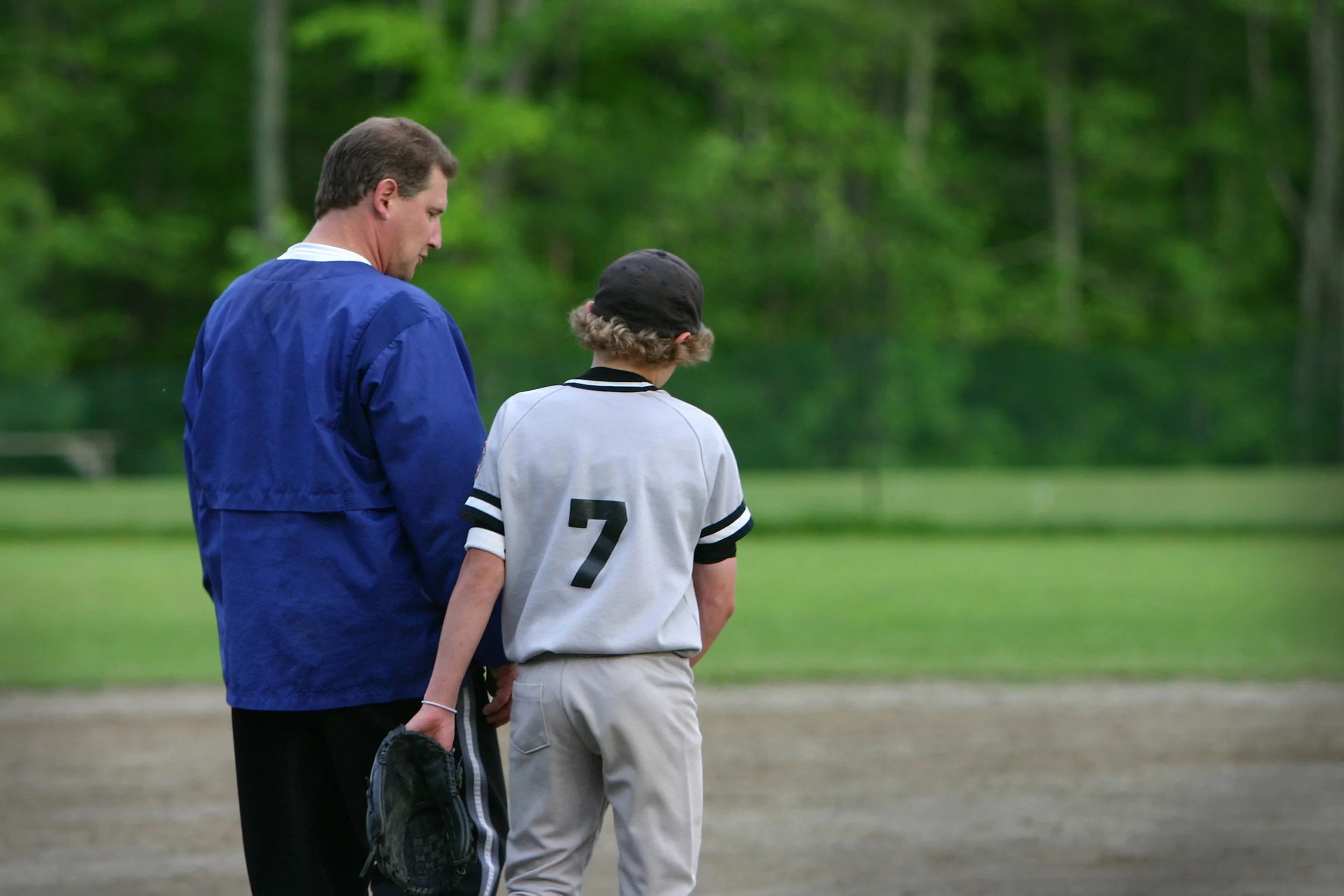
A young baseball player and an adult standing close together on the field talking quietly.
A 12-year old and a 16-year old can have the exact same bad game and go home with two very different problems.
As parents, we tend to think of youth sports stress as one thing that gets bigger or smaller with age. But kids change a lot between middle school and high school and what helps at 12 can backfire at 16.
An Alarm that Goes Off Over Toast
Throughout the teen years, the part of the brain that drives emotion develops faster than the part that handles self-control and planning. Think of a smoke alarm that goes off every time you make toast. The alarm works, maybe a little too well, and the part that tells it “this is just toast, not a fire” is still being built.
In middle shool, that gap is at it’s widest. So when your 12-year old falls apart after a bad practice, it isn’t a sign of weak character. Their alarm is just extra sensitive right now.
By high school, the alarm settles down. Teens can usually tell toast from a real fire, and they can explain what they’re feeling. But knowoing and doing are two different things, and under stress, the alarm can still go off.
Middle School: Everyone Is Watching
Middle schoolers often feel like everyone is watching them, all the time. They’re wrong, but the feeling is real. That’s why a 12-year old can care more about being embarrssed in front of teammates than about losing the game.
Their thinking also lives mostly in the moment. A bad tryout can feel like the end of ther world because they can’t step back and think, “This won’t matter in a month.”
And they still look to you to figure out how upet they should be. They read your face, your tone, even your silence on the car ride home. At this age, how you react often matters more than what you says.
What helps:
Stay calm first. Your steadiness tells them this is survivable.
Help them name the feeling before you try to fix it.
Praise effort often. Middles schoolers are still building their sense of who they are, mostly from what coaches and scoreboards tell them. What you emmphasize now becomes part of how they see themselves.
High School: Who Am I If I Can’t Play?
Hight schoolers have mostly outgrown the feeling that everyone is watching. Now they’re figuring out who they are. If sports are a big part of their life, how they play and who they are can start to blur together. A bad season stops feeling like a bad season and starts feeling like,“I’m not good enough.
They can also think further ahead, which brings new pressure: making varisty, keepig their spot, wondering what all this time is adding up to.
And they want more independence. The same involvement that helped at 12 can feel like pressure at 16.
What helps:
Ask before advising. Try, “Do you want my thoughts, or do you just need to vent?”
Show interest in who they are outside of sports. It reminds them they’re more than their stats.
Watch for burnout. A kid who used to love their sports and now seems flat may need a break or some support more than another push.
Stay close without hovering. They still need you , just in a different way.
Why the Timing Matters
Middle school is when kids are forming their sense of who they are. High school is when that sense starts to set. lt’s like the difference between planting a garden and weeding one.
That makes middle school the best time build healthy habits, like valuing effort and bouncing back from mistakes. In high school, the work often becomes helping a teen separate their self-worth from their performance after the two have already grown together. It can be done, but it takes more work.
Every kid is different, and ages are a guide, not a rule. But knowing where your child is developmentally helps you give the kind of support that actually fits.
About OAZ
At Optimal Athletic Zone, we believe that connecting mental wellness with peak performance strategies helps raise, happy, healthy, resilient kids, while also helping them perform their best on the field.
I’m Sue Sugarman, LCSW, BCD, a therapist, athlete, a sports mom. I hold the International Olympic Committee’s Certificate in Mental Health of Elite Athletes and teach at NYU Silver School of Social Work. I founded OAZ to support youth athletes on and off the field. Together with Becca Klapper, MA, EdM, CMPC, we help kids build kids confidence, handle pressure and enjoy their sport, while become heathy, happy, resilient people along the way.
